
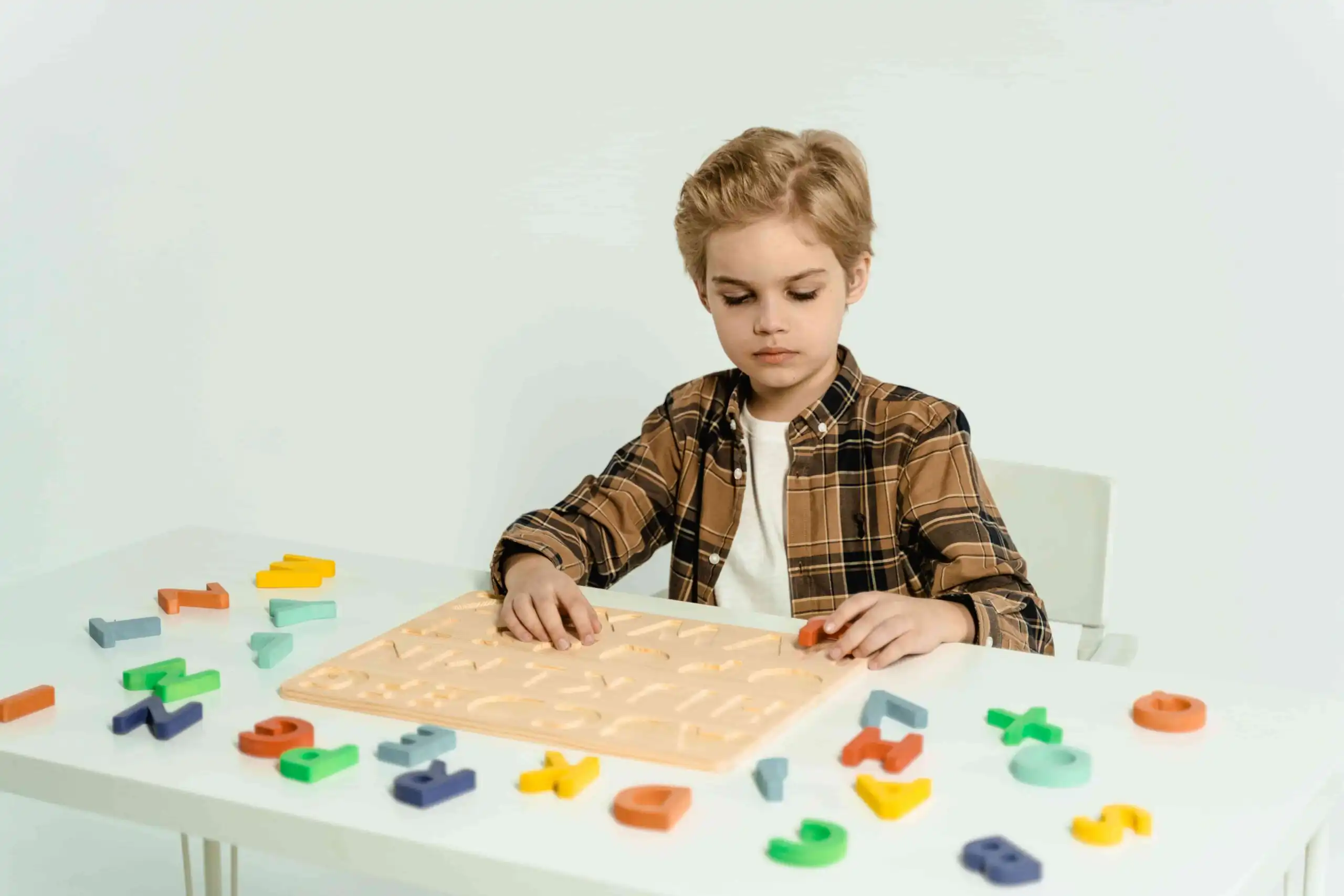
Children learn many skills by watching the people around them. They may see a parent wave and begin waving back, watch a sibling build with blocks, or observe a teacher putting supplies away before trying it themselves. This natural way of learning can also be used intentionally in Applied Behavior Analysis (ABA) therapy.
Modeling in ABA involves demonstrating a behavior or skill so a child can observe what to do and then have an opportunity to practice it. It can be used to teach communication, social skills, play, daily routines, and other behaviors that support greater independence.
What Is Modeling in ABA?
Modeling is an ABA teaching strategy in which a therapist, parent, teacher, peer, or another person demonstrates a target behavior for a child to observe and imitate.
For example, if a child is learning how to ask for help, a therapist might demonstrate saying, “Help, please,” before giving the child an opportunity to make the same request. The model gives the child a clear example of what the behavior looks or sounds like.
Modeling does not always mean simply showing a child what to do and expecting them to copy it immediately. Depending on the child’s needs, a therapist may use prompts, repetition, reinforcement, or other teaching strategies to help the child learn the skill.
How Does Modeling Work in ABA Therapy?
Modeling can be incorporated into structured therapy sessions as well as everyday activities. The exact approach depends on the skill being taught and the child’s current abilities.
A typical teaching sequence may involve:
- Identifying the target skill: The therapist determines what behavior the child needs to learn.
- Demonstrating the behavior: The therapist models the desired response clearly.
- Giving the child an opportunity: The child gets a chance to imitate or practice the behavior.
- Providing support: If needed, the therapist may use prompts or break the skill into smaller steps.
- Reinforcing progress: Appropriate attempts and successful responses can be reinforced.
- Reducing support over time: As the child becomes more comfortable with the skill, prompts may be gradually faded to encourage independence.
For example, an ABA therapist teaching a child to request a toy might first demonstrate how to use words, a gesture, or an appropriate communication system to make the request. The child can then practice the skill during play.
Examples of Modeling in ABA
Modeling can be used for many skills that children encounter at home, school, and in the community.
- Communication: A therapist can model words, phrases, gestures, or other ways of communicating needs. For example, they might demonstrate saying “more” during a snack or “my turn” during a game.
- Social skills: Children can observe examples of greeting others, taking turns, sharing, asking to join an activity, or responding when someone speaks to them.
- Play skills: A therapist might demonstrate how to build a block tower, use pretend-play items, complete a simple game, or interact appropriately with a toy.
- Daily living skills: Modeling can show children how to wash their hands, brush their teeth, put on clothing, clean up toys, or complete other routines.
- Coping and self-management: Adults can also model appropriate ways to respond to frustration, ask for a break, or seek help when something becomes difficult.
These examples show how modeling can make a new skill more concrete by giving the child something observable to practice.
Different Ways Modeling Can Be Used
Modeling does not have to happen in only one way. ABA therapists may select different approaches depending on the child’s learning style and the behavior being taught.
- Live modeling involves another person demonstrating the skill directly in front of the child. This can be especially useful during play, routines, and social interactions.
- Video modeling uses a video to show a child how to perform a particular behavior or complete a task. A child might watch someone demonstrate a social interaction or daily routine before practicing it.
- Peer modeling allows children to observe another child demonstrating an appropriate behavior. This can be useful for social and classroom-related skills.
Why Can Modeling Be Helpful for Children?
Verbal instructions alone may not always give a child enough information about what a new behavior should look like. Modeling provides a visible example that can make the expected response easier to understand.
It can help children learn how to:
- Communicate wants and needs
- Participate in social interactions
- Follow daily routines
- Play appropriately with others
- Complete tasks more independently
Modeling can also be incorporated into familiar activities, allowing children to practice skills in situations that are meaningful to them.
Helping Children Use Modeled Skills in Everyday Life
Learning a skill during therapy is only one part of the process. Children also benefit from opportunities to use those skills in other environments and with different people.
For example, a child may learn to ask a therapist for help during a session. Caregivers can provide opportunities to practice the same communication skill during meals, playtime, or household routines. Teachers may also reinforce the skill at school.
Using a skill across different settings and situations can help children apply what they have learned beyond the original teaching environment.
Conclusion
Modeling gives children an opportunity to see a skill in action before trying it themselves. From communication and social interaction to everyday routines, it can be a practical part of teaching skills that children can use across different settings.
At Wonderway ABA, we create individualized ABA programs that focus on your child’s unique strengths, needs, and goals. Contact us today to get started and learn how personalized ABA therapy can support your family.
Frequently Asked Questions
What is an example of modeling in ABA?
A therapist might demonstrate how to request a preferred toy by saying, “Can I have the car?” The child then has an opportunity to imitate the request and receive support as needed.
Is modeling the same as prompting in ABA?
No. Modeling involves demonstrating the behavior for the child to observe, while prompting provides assistance that helps the child produce the desired response. Modeling and prompting can be used together.
What if my child does not imitate the model?
Not every child will immediately copy a demonstrated behavior. A therapist may adjust the way the skill is modeled, break it into smaller steps, use additional prompts, or try another teaching approach based on the child’s needs.